
Korean Gochujang Chicken with Cucumber Salad
See it adapt to allergies, servings & swaps.
Per serving 660 kcal · 54g protein · 23g carbs · 40g fat
Ingredients
- 6 count chicken thighs, bone-in and skin-on
- 60 ml gochujang
- 15 ml rice vinegar
- 15 ml honey
- 3 count garlic cloves
- 10 g fresh ginger
- 60 ml water
- 30 ml olive oil
- 2 count cucumbers
- 15 ml rice vinegar, for the salad
- 5 ml salt
- 5 ml sugar
- 2 count scallions
Steps
- Mince 3 garlic cloves and grate 10 g ginger. In a small bowl, whisk together 60 ml gochujang, 15 ml rice vinegar, 15 ml honey, the minced garlic, grated ginger, and 60 ml water until smooth.
- Pat 6 chicken thighs dry with paper towels. Heat 30 ml olive oil in a large cast-iron skillet over medium-high heat until shimmering.
- Working in batches if needed, place the thighs skin-side down in the hot oil and sear 5–6 minutes without moving them, until the skin is golden and crisp. Flip and sear the other side 3–4 minutes. Transfer to a plate.
- Pour off the excess fat, leaving about 15 ml in the pan. Return the thighs skin-side up and pour the gochujang glaze over them, turning to coat. Reduce the heat to medium-low, cover, and braise 12–15 minutes, until the chicken reads 74°C (165°F) at the thickest part and the sauce has thickened.
- While the chicken braises, slice 2 cucumbers into thin rounds. Whisk 15 ml rice vinegar with 5 ml salt and 5 ml sugar in a separate bowl, add the cucumbers, and toss to coat. Let them sit 5 minutes.
- Slice 2 scallions on the bias. Move the chicken to a platter and spoon the remaining pan sauce over it. Scatter the scallions on top and serve the cucumbers alongside.
That is the whole thing.
No technique, no special equipment. This is what every Eatsë dinner looks like — the app suggests it, scales it to your house, and writes the recipe. Two weeks free.
Get Eatsë free
Two weeks free.
Gochujang does most of the work here. It is a fermented chili paste that already carries salt, sweetness, and heat, so the glaze is four things whisked in a bowl — paste, rice vinegar, honey, water — plus garlic and ginger. No layering, no reduction, no second pan.
The thighs get seared hard for the skin, then go back under the glaze and braise covered for twelve minutes while the cucumbers sit in vinegar. Twenty-eight minutes, one skillet, and the only thing you have to time is the chicken.
On the plate
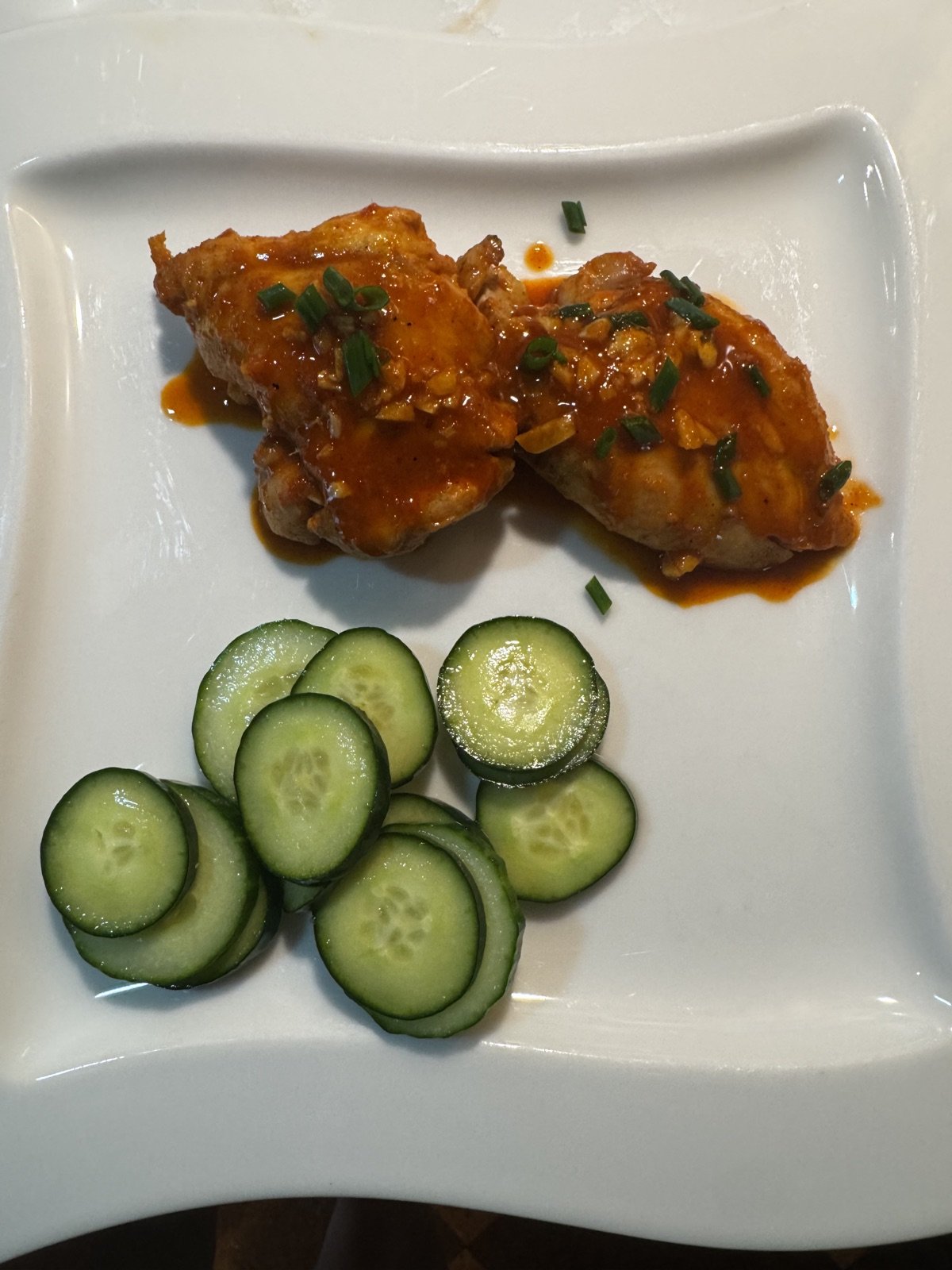
Two thighs to a plate with the pan sauce spooned over. The cucumbers are there for temperature and crunch — they cut the heat of the gochujang, and they need the full five minutes in the vinegar to stop tasting raw.
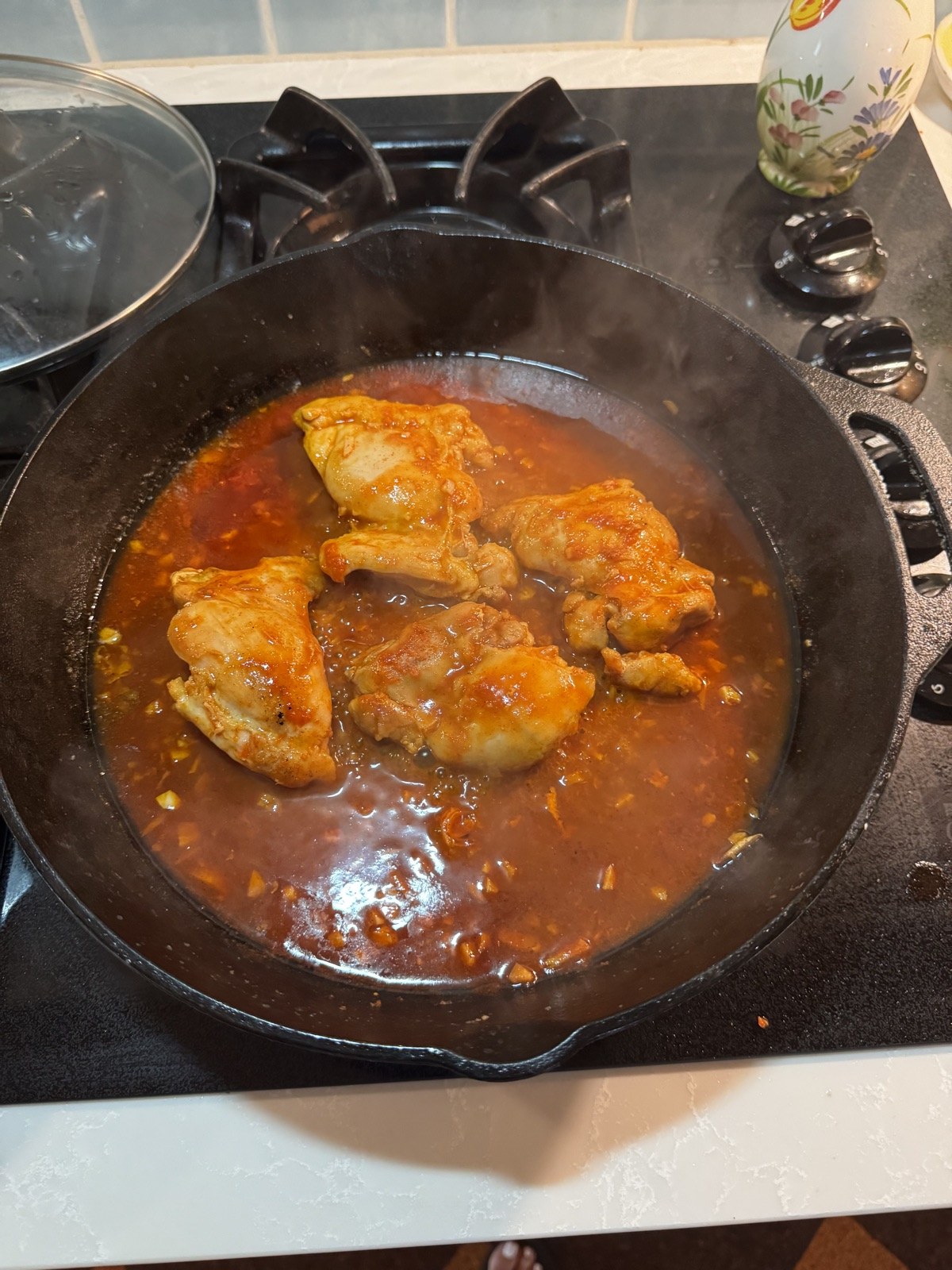
The glaze looks thin going in. Covered and on medium-low, it reduces around the chicken and turns glossy right about when the thighs come up to temperature. If it is still loose at 74°C, pull the lid and give it two more minutes.
Leftovers
- Store the chicken and sauce together in an airtight container in the fridge for up to 3 days. Reheat covered in a skillet over medium-low for 5–7 minutes, turning once, until warmed through.
- Keep the cucumber salad separate and eat it within 2 days. It softens as it sits but stays good cold or at room temperature.
- Don't freeze it — the braising liquid ruins the texture on the way back out.
This is the kind of dinner Eatsë takes the busywork out of: it scales each recipe to your servings so nothing goes to waste, builds the grocery list by aisle, and suggests the week's meals. You still choose, and you still cook. This one just happened to be too good not to write down.
More from the recipe library — the soy-glazed chicken thighs with crispy rice are a good next make.
Dinner, figured out.
Eatsë is free on the App Store. It plans the week, scales every recipe to your house, and builds the grocery list by aisle — you pick and cook.
Download Eatsë free
Two weeks free.