
Meal Prep for Beginners (Start Small, Skip the Overwhelm)
See it adapt to allergies, servings & swaps.
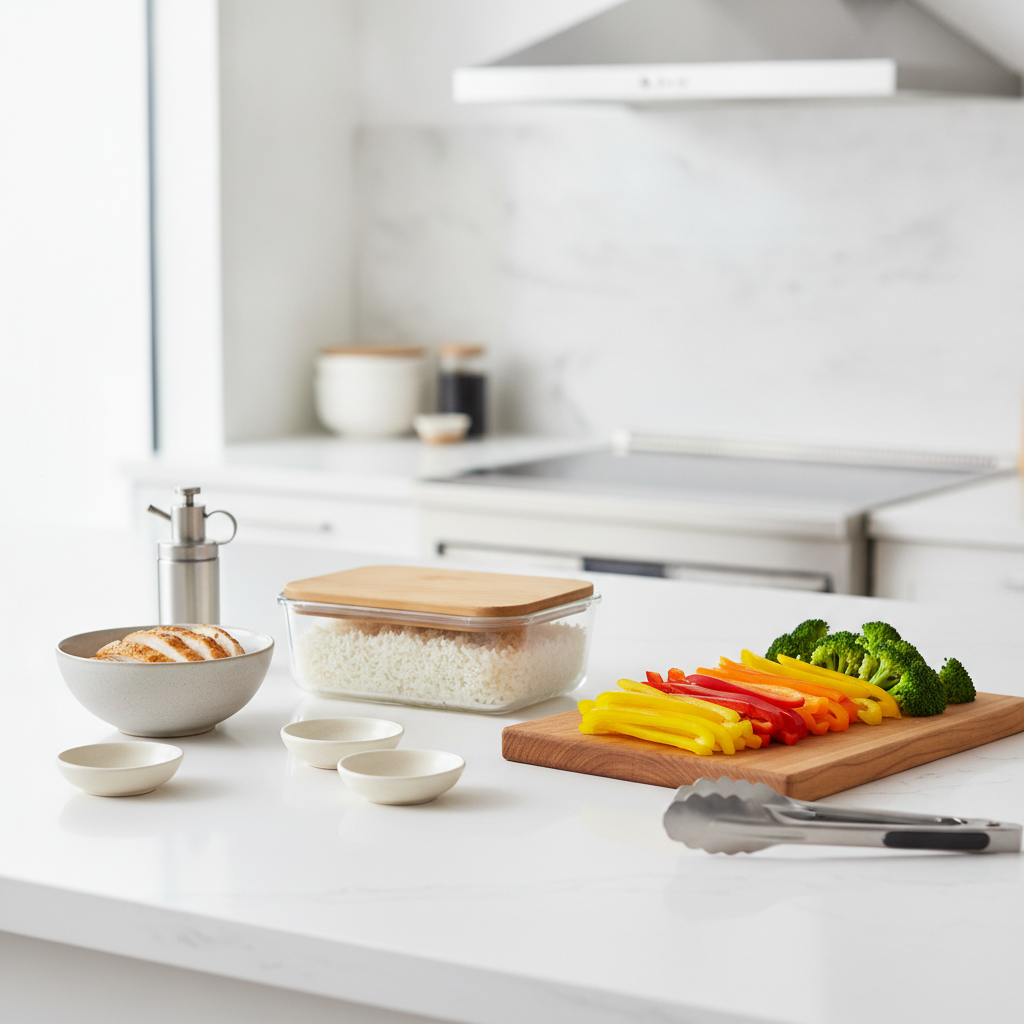
Most people fail at meal prep for one reason: they start too big.
You find a Sunday prep routine online. It involves five recipes, six labeled containers, three hours, and a grocery run you haven't done yet. You feel overwhelmed before you've cooked anything, skip it, and tell yourself you'll try again next week. Next week you do the same thing.
The beginner version of meal prep doesn't look like that. It's smaller. A lot smaller.
What beginner meal prep actually is
Meal prep isn't cooking all five weeknight dinners on Sunday and portioning them into containers. That's an advanced approach, and plenty of experienced cooks skip it because it's a lot of work.
Beginner meal prep is prepping one or two base ingredients so that cooking during the week requires fewer decisions and less active time. That's it. You're not cooking full meals. You're removing friction.
Cook a batch of rice. Roast some chicken thighs. Maybe slice your vegetables. That's a reasonable first week.
What to prep first
Pick one starch and one protein. Nothing else.
A batch of cooked grain — rice, quinoa, farro, whatever you like — takes about thirty minutes mostly unattended and keeps for five days in the fridge. It turns "I need to cook dinner" into "I need to add something to the grain I already made."
Roasted chicken thighs or breasts cooked on Sunday go into rice bowls, pasta, sandwiches, or tacos through the week. Forty minutes in the oven. Done once.
That's the starting set. If you prep both on Sunday, Monday through Thursday becomes: pull out the grain and protein, add vegetables or sauce, eat in twenty minutes.
Later, once that feels easy, you add one more thing. Maybe roasted vegetables. Maybe a sauce that lasts the week. Not on week one.
The step that stops most beginners before they even start
The grocery list.
You decide you're going to prep on Sunday, then you have to figure out what to buy, write it down, go get it, and come home before you can cook anything. If the list doesn't come together, the prep doesn't happen.
This is where motivation usually runs out. The prep itself is simple. The "what do I buy to make this possible" step is where most people stall.
A meal planning app with a grocery list handles the translation from "I want to prep these things" to a consolidated, aisle-sorted shopping list automatically. That removes the step that usually kills momentum before it builds.
Why week two falls apart
Week one goes fine. Week two, you forget to plan what you're prepping, skip Sunday, and by Wednesday you're back to ordering takeout.
The structure has to come from somewhere outside you, or it won't survive. Most people rely on motivation to restart it each week. Motivation isn't reliable. The plan needs to reset automatically.
This is the same barrier that makes meal planning hard for people with ADHD or executive-function challenges, but it's not exclusive to them. Feeding yourself is a recurring open-ended task that requires self-initiated structure, and that's hard for anyone who's already depleted at the end of the week. Meal planning for ADHD walks through what structure needs to look like to actually survive past week one — the principles apply even if ADHD isn't your specific situation.
How to keep it going
One practical checkpoint: before the week ends, decide what you're prepping the following Sunday. Write it down. Don't leave it as an open question you'll figure out when you get there.
From there, the simplest version of "keeping it going" is a short rotation of three or four prep combos you like. Same grain options, same protein options, different sauces and vegetables each week. Variety without planning from scratch.
Eatsë does the work behind that rotation. It suggests a week of dinners built around your preferences, scales the recipes to your household size, and builds the grocery list so you're not starting from a blank slate every Sunday. The week comes pre-set; you pick what sounds good and shop from one list.
If you're figuring out whether an app actually fits what you need, what is a meal planning app explains what these tools do and what to look for before you commit to one.
Two weeks free. Then dinner's figured out.
Dinner, figured out.
Eatsë is free on the App Store. It plans the week, scales every recipe to your house, and builds the grocery list by aisle — you pick and cook.
Download Eatsë free
Two weeks free.