
How to Start Meal Planning for Your Family (Without the Spreadsheet)
See it adapt to allergies, servings & swaps.
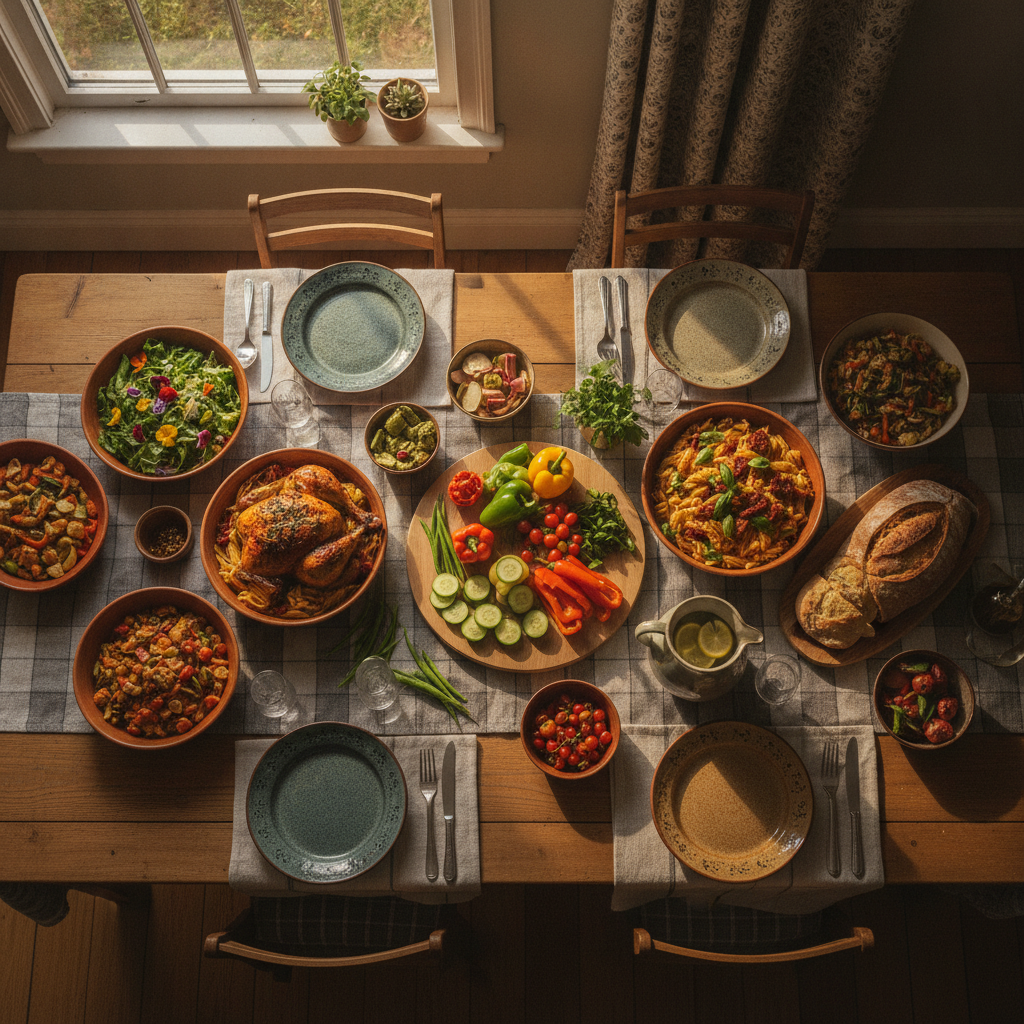
Every few months someone in the house suggests "we should really start meal planning." It sounds like a good idea. It is a good idea. Then Sunday afternoon arrives, no one can agree on anything, the spreadsheet stays empty, and by Monday you're back to the same five meals or the same question at 5pm: "What do you want for dinner?"
The spreadsheet isn't the problem. The problem is where the plan lives.
Why family meal planning keeps falling apart
In most households, meal planning fails not because it's complicated but because the whole mental load sits with one person. That person holds all the information: who eats what, what's already been cooked this week, what's in the fridge, how much time there is on a given night. There's no system that holds any of this, which means there's no one else who can meaningfully contribute to the plan.
Your partner can't help pick dinners if they don't know what the kids won't eat or what you've had three times already this month. The spreadsheet doesn't help because the constraints are still in your head. You fill it in alone, then have to police it alone.
Family meal planning is a coordination problem, not a recipe problem. Fix the coordination and the rest gets easier.
Step 1: Write down the no-go list
Before you touch a recipe, write down what your household actually won't eat. Not what they'd "prefer not to have" or "don't love." The things that will cause a dinner to fail on arrival.
This list is more useful than any meal plan because it filters what can even go on the plan. Keep it somewhere everyone can see it and update it. When your kid announces a new refusal, it goes on the list. When someone rediscovers they actually like salmon, it comes off.
This sounds simple because it is, but most households don't have this written anywhere. The primary cook just holds it.
Step 2: Build a rotation, not a perfect week
The goal is not to find seven exciting new meals every Sunday. That's too much. Start with 10 to 15 meals your household already likes and will eat without complaint. These can be boring. Boring meals that actually get cooked are better than ambitious ones that never make it to the table.
Write them down. This is your rotation. When you're building the week's plan, you're picking from this list, not searching from scratch.
For actual recipe ideas your family will get through, the easy dinner recipes for families guide has 10 practical options sorted by what works for real weeknights.
Step 3: Plan for three or four nights, not seven
Seven-night meal plans sound thorough, but they rarely survive contact with the week. Something runs long at work. Someone has a birthday dinner. Tuesday's plan gets moved to Wednesday and then nothing fits anymore.
Plan four nights. Leave room for leftovers, takeout, or whatever Tuesday actually becomes. A plan that survives the week is more useful than a perfect plan that doesn't.
Step 4: Build the grocery list once
The list that kills most meal planning is the grocery list, because it has to be assembled by hand from every recipe, consolidated across multiple meals, and then somehow shared with whoever is actually doing the shopping.
Most families do some version of this: a running list on the counter, a shared note, a text thread that gets chaotic. None of it is aisle-sorted. None of it accounts for what's already in the pantry. And if one person does the shopping without the list, something gets missed.
A good system builds the list automatically from whatever meals you've planned, consolidates it into one place, and keeps it updated when you shop. That's not a spreadsheet feature; it's what a grocery list-integrated meal planning app actually solves.
Step 5: Get the plan out of your head
The single most important shift is getting the plan out of your head and into something you can hand over. When the constraints are written down instead of remembered, your partner can help with the shopping without you having to brief them first. When the week's meals are settled ahead of time, the 5pm "what do you want" conversation is already answered.
This is why, in most families where meal planning actually lasts, it lives in an app rather than a spreadsheet. The spreadsheet is one more thing to maintain. An app that holds the preferences, suggests the meals, and builds the list for you is the plan doing its own upkeep.
What most families end up using
Once the coordination piece is solved, meal planning stops feeling like a project and starts feeling like it's just handled. You open it, see a short list of dinners that already fit your household, pick the ones that sound right this week, and the grocery list is ready. Send it to whoever's going to the store and nothing gets missed.
Eatsë is built for this: household preferences, one consolidated grocery list you can send to whoever's shopping, dinner suggestions that already account for what your family will and won't eat. The rotation grows over time as it remembers what you rate highly.
Two weeks free. Try it at eatse.app.
Dinner, figured out.
Eatsë is free on the App Store. It plans the week, scales every recipe to your house, and builds the grocery list by aisle — you pick and cook.
Download Eatsë free
Two weeks free.