
What Is a Dinner Table App? (And Why Eatsë Is One)
See it adapt to allergies, servings & swaps.
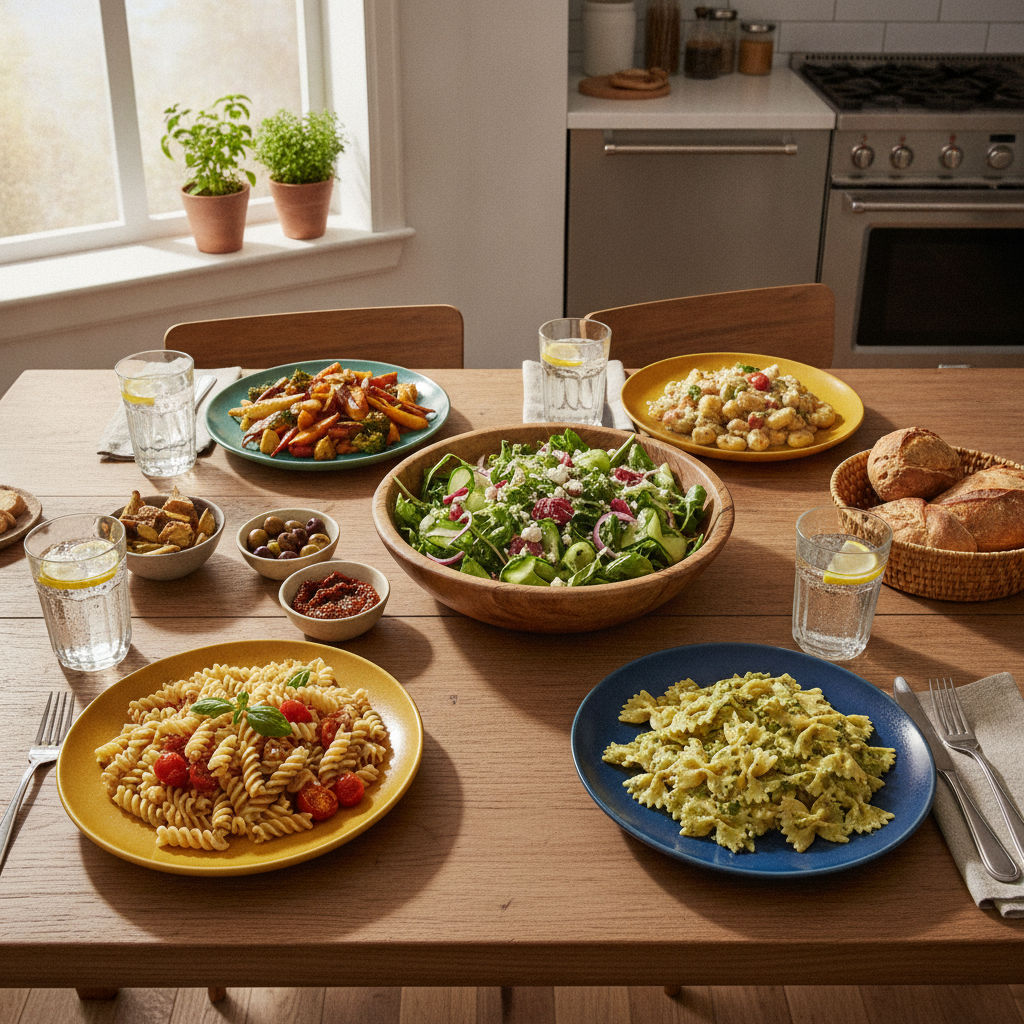
The phrase "dinner table app" keeps coming up in searches, but nobody has defined it cleanly. It's not a recipe app. It's not food delivery. It's the app you open at 5pm, when the real question lands: what are we having tonight?
Here's what it actually means.
What separates a dinner table app from a recipe app
A recipe app stores recipes. A meal kit delivers them. A dinner table app sits one step earlier: it helps a household figure out what to cook before anyone has to open a cabinet, start a group text, or ask the same question for the third time this week.
The job is coordination. Who eats what. What's already come up this week. What anyone is realistically going to be willing to eat tonight. A dinner table app holds that information so it doesn't all have to live in one person's head.
If you want a deeper look at how meal planning apps fit into this picture, this breakdown on what a meal planning app actually does is worth reading first.
Why this is harder than it sounds
If you're the person who runs dinner in your house, the problem isn't finding recipes. It's that the constraints live in your head alone. Your partner's thing about mushrooms. The kid who ate chicken every day and then one day refused. What you made Tuesday that nobody touched. There's no shared system, which means there's no one who can actually help you decide.
That's what "dinner table app" captures. It's not about cooking. It's about the conversation that happens before cooking, and the mental load that lands on one person because there's nowhere else to put it.
How Eatsë works as a dinner table app
Eatsë is built around households. You set up preferences once: who eats what, the allergens and dietary restrictions, how many you're feeding, how much cooking you're up for. Then when you open it, you get a short list of suggestions that already fit your house. No vetting. No cross-referencing. You pick from a curated set, and the things that don't work for your family are already filtered out.
You still choose. That's not outsourced. What does get taken off your plate is the searching, the scaling, the "does this work for everyone" check that happens before you even see an option.
The grocery list builds automatically from whatever you pick. Send it to whoever's going to the store and they have the same list you built, in full. No forgotten items, no duplicate buys, no silent assumptions about who bought the pasta.
It also gets to know your household's taste over time. Rate what you cook and the suggestions lean toward what's worked without looping back to the same meal twice. The options get more personal the longer you use it. For families with a lot of constraints, that compounding is what makes a family meal planning app actually useful long-term rather than just for the first week.
Who it's for
Primarily the person who runs dinner for a household. The one who holds the no-go lists, tracks the rotation, builds the grocery list, and gets the "what's for dinner?" question every night. A dinner table app is the external system that holds what's currently living only in that person's head.
If the house runs on easy dinner recipes for families that everyone will actually eat, Eatsë can suggest them. If the constraints are more complicated, that's exactly what it's built for.
Two weeks free. Try Eatsë here.
Dinner, figured out.
Eatsë is free on the App Store. It plans the week, scales every recipe to your house, and builds the grocery list by aisle — you pick and cook.
Download Eatsë free
Two weeks free.